Showing posts with label Market. Show all posts

Wednesday, 21 January 2015

A Tasmanian champion of car design

A Tasmanian has designed one of the showcase cars at the recent Detroit Motor Show – the new Ford GT.   This was one of three headline grabbing cars revealed at the North American International Auto Show in Detroit this month which were designed by Australians.


While Holden’s design studio in Port Melbourne was responsible for the design and construction of two of General Motors’ showpieces, over at Ford, the creation of its stunning GT supercar was overseen  by Tasmanian Todd Willing. 

The 'Tasmanian designed' Ford GT, unveiled at the Detroit Motor Show


Hobart born and bred, Willing managed a team of just six designers under a shroud of secrecy to create the mid-engined Ford GT in a secret location in the US.  He was reportedly not permitted to tell his family or friends what he was working on for more than 14 months!   

Willing told reporters at the car show ‘It’s every designer’s dream to work on a car like this.  A once-in-a-career opportunity.’

The car has special significance to Ford as the original Ford GT40 won the LeMans 24-hour race four consecutive times from 1966-69 after being defeated by Ferrari in the previous six years.

This new car controversially runs on a twin-turbo V6 engine rather than a V8, but Ford says it makes more power than its predecessor without burning as much fuel.

Willing has heard and seen the car being tested but as yet has not driven it.  And although it’s a ‘global car’ it will be manufactured only in left-hand drive and not sold in Australia.

Having managed the top-secret supercar project he has now returned to Australia as the head of Ford’s Asia-Pacific design studio in Broadmeadows.

It is the first time Australian designers have played such a significant role on the world stage and shows that we can still have some input into the worldwide automotive industry while the local manufacturing industry comes to an end. 

And it just goes to show the talent that comes out of Tasmania!


Wednesday, 24 April 2013

Aussie car manufacturers: an endangered species?


The chiefs of Australia's big three car manufacturers are warning that around 50,000 jobs will be lost if the government withdraws its assistance to the industry.

That assistance is expected to be a major federal election issue this year, with Tony Abbott promising to strip $500 million out of a green-car fund if the Coalition is elected.

Ford chief Bob Graziano, Holden chief Mike Devereux and Toyota chief David Buttner have all indicated that the sector will not survive if government support is abolished.

Bailouts have been controversial in recent years, with the three companies shedding 1350 jobs between them despite receiving billions in handouts.

Holden has received $2.2 billion in government subsidies in the past 12 years, while Ford has picked up about $1.1 billion - but neither can guarantee local production beyond 2016.

According to industry estimates, the three companies employ 17,000 people directly, while the industry (including suppliers) employs 55,000 and supports 200,000 jobs indirectly.

And if one of the manufacturers left Australia, the whole industry could collapse because the supplier network would not have enough volume to be profitable.


Toyota is the only Aussie car manufacturer with a significant export program. Its CEO David Buttner said government policy needed to continue supporting the car industry or Toyota would look at spending its money elsewhere.

"There's a whole host of countries around the world vying for Toyota's investment," he said.

Holden's Mike Devereux responded to critics of the Australian car industry, saying that assistance to the manufacturing was worth every cent. Ford Australia's Mr Graziano agrees, noting said that Australians spent less on car industry assistance than other countries.

"If you look at Australia the support here is a little bit less than $18 per person compared to significantly higher amounts in other countries around the world, but without that assistance, it would be difficult to see the industry surviving."


Wednesday, 20 March 2013

Nissan makes history by trumping Holden sales in February


Last month, Nissan's new car sales surpassed Holden's for the first time in Australian automotive history. It's also the second time in the past twelve months that Nissan has beaten Ford in a monthly new car sales tally. In fact, Nissan is selling more cars now than when it assembled them locally (between 1972 and 1992).


In disturbing news for Australia's struggling car manufacturers, the top-three selling car brands in February were Japanese. Only two locally made cars, the Commodore and Cruze, made it into the top 10 - barely.

Industry veterans are blaming the Australian dollar, which has been at record highs for two years. In December, one Australian dollar bought 80 Japanese Yen, but as the Japanese currency weakens, the value of one Australian dollar climbed to almost 95 Yen at the start of March.

The artificially devalued Yen has enabled Australian importers of Japanese cars to offer abnormally sharp discounts. Honda Australia has even reverted to sourcing some cars from Japan (rather than Thailand) because of the price drop.

Brand-new models of the Nissan Pulsar, Toyota Corolla and RAV4 have recently been released in Australia with the same - or in some cases even cheaper - prices than they started with in the 1990's, despite being much better equipped.

The dramatic effect of rising currency on the Australian car manufacturing industry has renewed calls for the Reserve Bank to weaken the dollar - and quickly. The industry is at risk of being squeezed down the market ladder as European brands also move to make the most of favourable exchange rates. Last year a Mercedes Benz was the second-highest selling medium sedan after the Toyota Camry, ahead of the Mazda6 and Subaru Liberty.

The preliminary sales figures for February 2013:

Top-selling brands (compared to February last year)

  • Toyota - 15,992 (up 7 per cent)
  • Mazda - 8728 (up 0.4 per cent)
  • Nissan - 8225 (up 32 per cent)
  • Holden - 7687 (down 20 per cent)
  • Hyundai - 7505 (up 1 per cent)
  • Ford - 6590 (down 5 per cent)
  • Volkswagen - 4190 (up 1.4 per cent)
  • Honda - 3862 (up 48 per cent)
  • Subaru - 3104 (down 3.8 per cent)
Top-selling cars in February (compared to February last year)
  • Mazda3 - 3378 (down 11 per cent)
  • Toyota HiLux - 3319 (up 46 per cent)
  • Toyota Corolla - 3158 (up 0.5 per cent)
  • Nissan Navara - 2639 (up 30 per cent)
  • Mitsubishi Triton - 2336 (up 72 per cent)
  • Hyundai i30 - 2055 (down 15 per cent)
  • Ford Ranger - 1739 (up 118 per cent)
  • Holden Commodore - 1733 (down 42 per cent)
  • Holden Cruze - 1730 (down 39 per cent)
  • Nissan Dualis - 1548 (up 70 per cent)
Figures provided by news.com.au Read more at news.com.au

Friday, 8 March 2013

Respect your car: use quality parts and products


How can you be sure that your service repairer is using quality parts when they service and repair your car? 

When it comes to your car's maintenance it’s very important, for both the longevity and value of your car, to  use only quality brands and genuine parts - not cheap, generic products.

Take engine oils, for example. There are a lot of companies selling engine oil, but to make sure your engine is getting the protection it deserves you're always better off sticking with the well known brands like Castrol or Valvoline. At Cooper Automotive we prefer Valvoline engine oil, and most of the time we use a specification that is better than the manufacturer recommends to make sure your car is getting the best protection possible.

Another important example is your repairer's choice of brake pads. There are a whole heap of cheaper brake pads out there that some mechanics will put on your car - but we refuse to use them. The safety of you and your family is our first concern, so we only use Bendix brake pads which are the best quality brake pads on the market. 


Most people won't know too much about which brands are good or bad for their car. The best thing you can do to guarantee the quality of the parts in your car  is to choose a service provider that you can trust and who guarantees their workmanship. If they are guaranteeing their workmanship you can bet they are using quality products.

It goes without saying that at Cooper Automotive we only use the best quality parts and spares - becuse we care about your car!

Thursday, 28 February 2013

Compare your insurance and save!


Would you stick with your auto-insurance provider if you knew there might be a better one out there? 

These days we are spoiled for choice when it comes to insurance providers, and it's a lot easier to research their products and policies online, but changing providers can still be a bit daunting to anyone who has always stayed loyal to single insurer as we tend to in Tasmania. Today we will look at the nuances of migrating to a new insurance policy, perhaps one that suits your needs better, has more flexible options, or just saves you money!

A good insurance policy limits your damages and protects you from undue financial stress when something goes wrong with your car. The cost of the premium should be within your budget while providing the best cover for your vehicle.


So what do you do when you find a new policy or provider that you would like to switch to? It’s quite simple really. Some insurers will let you cancel your policy (if you give them proper notice) without a charge, while others will levy a cancellation fee in order to forfeit your policy. If you’re switching to a different policy offered by the same insurer, your cancellation fee may be waived depending on the company rules. You can sometimes avoid paying a cancellation fee if you cancel your policy during the ‘cooling off’ period. The cooling off period occurs just after you've purchased the policy, or when the policy is due for renewal.

If you decide to cancel your current policy, let your insurer know well in advance in order to make the transition a smooth experience. Cancelling your policy when it is up for renewal makes sense, as you will be able to avoid a cancellation fee, and the administrative process following your cancellation will be much simpler.

Most importantly, before you make the final switch make sure you read through the policies available to you. Read the fine print prior to signing up - make sure that you know exactly what you are getting into and what the insurer promises to provide in the case of a claim.

A good way to start looking at alternative insurance providers is to get a general overview of what other companies might charge you for insuring your car. This website might be helpful in getting an idea of what you can expect to pay from a range of car insurance providers.


Wednesday, 13 February 2013

Class of 2013

This year the Australian market will welcome a broad range of new arrivals, from SUVs to small cars to high-performance vehicles. Last year it was all about mileage and economy - but 2013 has kicked off with car makers focusing more on style and performance.

Here are some of the cars that we think will get drivers excited when they hit the Australian market this year! 

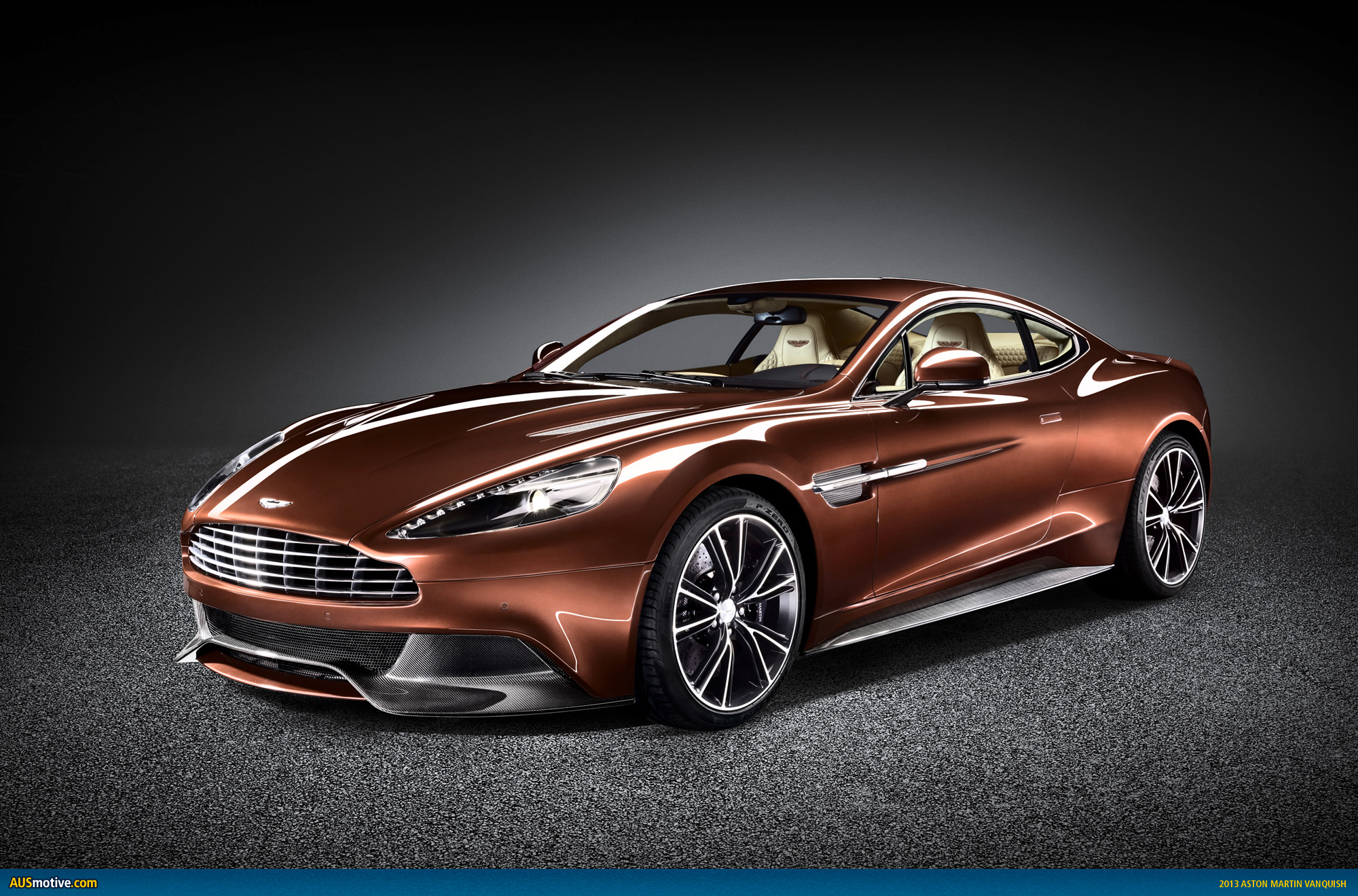
Aston Martin Vanquish


The new Aston Martin Vanquish is a beautifully designed car with amazing specs; a 6.0 litre V12 engine that produces 421kW at 6750rpm and 620Nm of torque at 5500rpm. The transmission system is a six-speed Touchtronic 2 sequential transmission, and the Vanquish's 0-100km/h time is listed at 4.1 seconds. Now that's power!

Ferrari F12 Berlinetta


The Ferrari F12 Berlinetta is one of the fastest cars available on the Australian car markets. As a seven-speed paddle-shifted automatic, Ferrari promises a 0-100km/h time of 3.1 seconds and 0-200 km/h in 8.5 seconds. It also includes some of the most modern features available in high performance cars like the magnetorheological suspension control system, an electronically-controlled differential, ESP Premium, F1-Trac, ABS and carbon-ceramic brakes. 

Ford Fiesta ST 


The Ford Fiesta ST is a Fiesta with a major facelift- it looks sharper, and far more attractive. Being an environment friendly car, it is estimated that its carbon dioxide output will be improved by 20 percent over the old 110kW model. It will sport a 130kW EcoBoost 1.6 litre turbo engine that can achieve great speeds while front wheels handle a torque of 240Nm along the way. The Fiesta ST is 15mm lower than the older one and features a trick Torque Vectoring system along with three electronic stability modes. It is available in six speed manual transmission. 


Wednesday, 6 February 2013

Tips for Buying a Used Car


Buying a used car is a great option if you're shopping within a limited budget. However, a used car will usually need a rigorous background check to ensure that you get a good deal. 

It's usually a good idea to look for a late-model vehicle that has not clocked up many kilometres. There is a good chance that, in addition to being in better condition, it will also still be covered under the manufacturer's warranty. Later models are generally better as the rate of depreciation is slower, making it even cheaper than a comparable brand new car while offering similar features.

Recent models will generally qualify for an extended warranty program, which protects you in the case that something goes wrong. It's usually advisable to purchase a used car from a dealer, as they often have the best used cars on the market - dealerships will often shift cars with huge mileage or other major problems to road side lots or smaller outlets that specialise in budget cars. 

In order to get the best deal, compare a few models and their prices at different dealers. This not only gives you an idea of the prevailing price in the market, but also provides you with options in case you find something better than you were originally looking for within your budget. 

Another factor that you need to consider is potential maintenance costs that might be in addition to the purchase price. Is the vehicle due for a major - and potentially expensive - service? How long until the brakes need fixing? Does it have overdue mechanical repairs? Has it had major body repairs which have been poorly done?

Just how good a car is it?

If you are not sure, remember that Cooper Automotive offers pre-purchase inspections.

We can carry out a thorough vehicle inspection accompanied with a full written report prior to you buying, which could potentially save you thousands of dollars down the track. One of the best tips you'll ever get for buying a used car is this: talk to an expert before you buy!

Wednesday, 23 January 2013

The Lexus IS F

The Lexus IS F is a high performance V8 that delivers comfort and refinement on city streets - but can also take on racing circuits!

Not only is the engineering superb, the interior design also exceeds all expectations. The cabin is designed with dark silver carbon fibre finishes, aluminium pedals and sculpted bucket front seats. It boasts 8-way powered sports seating and the memory function allows you to recall your preferred seating position. Exterior mirror and steering column positions can also be adjusted at the touch of a button. Those who like a little luxury during our cold Hobart winters will definitely appreciate the heated front seats!

Here is quick list of all the awesome features of the Lexus IS F:

  • A 5.0 litre V8 engine 
  • The world's first sequential eight speed automatic transmission 
  • Packed with 311kW of raw power at 6,600rpm and 505Nm of torque at 5,200rpm 
  • Best-of-breed race-tuned suspension and BremboTM brakes, with gear changes in 0.1 seconds 
  • Quadruple exhaust pipes that make the IS F sounds unlike any other vehicle on the streets!
  • The L finesse generates impressive aerodynamics to deliver a low 0.30 drag coefficient and a quiet cabin 
  • For stability at high speeds, the underbody includes a fibreglass reinforced engine undercover providing additional stability at high speeds 
  • Massive air intakes help cool the V8 engine, while radiator grill and side air grills quickly extract heat and cool the engine and brakes
  • 19 inch forged alloy wheels that help draw air across the brakes to aid cooling; light and incredibly strong, the front wheels are eight inches wide while the rear are nine inches wide 
  • Intelligent front and rear lighting. Daytime Running Lights make the vehicle more visible to other drivers and pedestrians and the powerful ‘High-Intensity Discharge’ headlamps give greater night vision
  • Power-operated moonroof for extra ventilation and open air cruising 
  • A hands-free Smart Key Card allows you to unlock and lock doors and start the engine at the touch of a button - without removing the card from your pocket or bag 
  • Exterior mirrors feature a sleek, aerodynamic look which reduces wind noise, moreover these Electro-Chromatic mirrors that automatically dim on excessive light detection
The Lexus IS F is a perfect buy for those who want the privilege of owning a sports car that can be used on city roads. This car packs a solid punch!

Monday, 21 January 2013

The Holden Story


The very first all-Australian car was a Holden that went on sale in 1948.

Before World War II, Holden assembled cars for General Motors and Chrysler. But after the war was over, the Australian government considered it vital to build home industries to support the soldiers coming home (they would need good jobs to support themselves and their families) and to strengthen its economic and political status.

Consequently, it chose to support Holden in manufacturing an all Australian-made motor car. The design of the first Holden was based on a General Motors prototype that was modified to suit the Australian environment, and in 1948 the first Australian made car, the Holden 48-215 (later referred to as the FX Holden), hit the streets of Melbourne. Although it was a pretty basic machine even for that era, the FX Holden was a well-loved car in Australia and long waiting lists stretched into 1949 and beyond. 


The FX Holden was big and robust - spacious enough to fit a large family - and heavy-duty as well, with it's steel frame designed to handle tough conditions. It also managed to deliver 48 kilometres for about 3 litres of petrol without sacrificing performance. 

Owning an Aussie car in the 1950's was a matter of great pride, resonating with the patriotic feelings of the time. To this day, Holden occupies a special place in the hearts of many Australians.

Holden continues to manufacture motor vehicles in Australia as a subsidiary of General Motors, and still exports vehicles and engines to other countries. Among other models, it produces the popular Commodore that was first introduced to the market in 1978. The Holden Commodore is still one of the most loved cars in Australia and has been continually updated to meet the demands of modern consumers.  

Thursday, 17 January 2013

The new Audi Q5!

The freshly made-over Audi Q5 has arrived!

With a mission to protect Audi's medium prestige SUV/crossover market share from the BMW X3, Range Rover Evoque and Volvo XC60, the Audi Q5, a slick mid-size SUV, comes with: 
  • Two all-new engines 
  • Eight-speed auto availability 
  • Big efficiency improvements 
  • The latest driver-assistance and multimedia technology 
  • Improved ride quality – softer springs, firmer dampers and new anti-roll bars
The change begins with a new engine for the range-topping petrol model; the 3.2 FSI has been replaced with a new twin-charged (supercharged and turbocharged) 3.0-litre V6.


Audi claims the new Q5 3/0 TFSI delivers 200kW/400Nm, accelerates from zero to 100km/h in 5.9 seconds and returns combined cycle fuel consumption of 8.5l/100kms. The petrol versions also boast Audi’s outstanding eight-speed Tiptronic automatic transmission.

Audi Q5’s diesel star, the 3.0 TDI, delivers 180kW/580Nm, cutting the consumption by 15 percent to 6.4l/100kms. The 130kW/380Nm 2.0 TDI delivers fuel consumption of 6.1l/100kms. A switch to electromechanical power steering is an added feature.

In short, we can say that the Audi Q5 delivers a little more of everything: value, efficiency, performance, safety, driver-assistance and the latest multimedia tech.

It’s no wonder the Q5 has become Audi’s strongest performer in the mid-sized premium SUV class world-wide. The styling is smart and purposeful, the interior has been fashioned to the highest standards, there is plenty of space to move around and even the rear seats slide and re-configure for more practicality. 


Friday, 11 January 2013

The Hybrid Story


The ever-rising cost of fuel has created a demand for ‘hybrid cars’ both in Australia and overseas. But what is a hybrid car and what advantages do they offer?

Basically, a hybrid vehicle is one that uses two or more separate power sources, such as an electric propulsion system alongside a conventional petrol engine. The small petrol engine delivers better fuel economy while maintaining the same level of performance and when more power is required for acceleration, the electric propulsion system delivers the extra kick.

Some of the advantages of a hybrid vehicle include: 
  • Stop-start technology that conserves energy - the petrol engine turns itself off when the car is idle, and then automatically re-starts when the driver engages the accelerator. 
  • Hybrids are the greenest cars on the market because of their low carbon emission levels - far lower than standard petrol cars. The main pollutant from most cars is carbon dioxide, which is directly related to the amount of fuel used. An Australian study estimated that hybrid vehicles boast a 66% reduction in carbon dioxide emissions compared to the average Australian family car. 
  • Hybrids use as little as half the fuel of a conventional family car. While hybrids are more expensive upfront than their petrol equivalents, the reduced fuel costs will over time make-up for the extra purchase cost.

Currently the most popular hybrids in Australia include the Toyota Prius and the Honda Civic Hybrid, but other models are now making their way on to the market, such as:
  • Toyota Camry 
  • Lexus CT 200h saloon, RX450h SUV, GS450h V6 luxury sports saloon, LS600hl V8 luxury saloon 
  • Honda Civic Insight saloons 
  • Honda CRZ sports and the Honda Jazz Hybrid (due to be launched in December)

Friday, 28 September 2012

Demystifying Your Car Insurance

Car insurance is something that most experienced drivers are familiar with, but it can be pretty confusing to young drivers and new car owners. The type of cover you take out will affect the ongoing cost of your vehicle, so you should always shop around for car insurance and find a price and level of coverage that suits your situation. 

To get you started, we've put together a quick list of the four types of general insurance that relate to owning and operating a private motor vehicle in Australia:
  • Compulsory Third Party Insurance
  • Comprehensive Insurance
  • Fire & Theft Only
  • Third Party Property Only
Compulsory Third Party
All drivers should be aware of Compulsory Third Party Insurance as it is illegal to drive a vehicle that does not have this coverage. This insurance protects individuals who you may injure whilst driving a vehicle. In Tasmania this insurance is provided as part of your vehicle registration fee (called MAIB Premium). This insurance covers injuries sustained to others and yourself in case of an accident and this is why it is so important to ensure that your vehicle is registered at any time when taken on public roads!

Comprehensive Cover
This can cover repair or replacement of your vehicle for events  including theft, collision, malicious damage and weather related damage. It can also cover repair and replacement of other vehicles that are damaged by your vehicle. Comprehensive insurance is usually chosen to cover vehicles that are in good condition. Your insurer may choose to not provide cover to vehicles that are over a certain age, in a poor state of repair or have issues such as rust.

Fire & Theft Only
This type of cover will not help if you are involved in an accident, but it may repair or replace your vehicle in the case that it is stolen and damaged by fire.

Third Party Property Only
This can provide cover for damage caused by your vehicle to other vehicles or property, but does not provide cover for your vehicle. This type of cover is typically taken out by someone with a relatively low value vehicle, primarily to protect them from having to pay for the damage their car might do to a more valuable vehicle or other property belonging to a third party.

Here is a handy graph provided by the Australian Government's MoneySmart website that illustrates the different types of vehicle insurance you should consider.

TypeDamage to your carDamage to other people's property (e.g. other cars)Damage or loss caused by theft of your carInjuries or death to other people in an accident
Compulsory third partycrosscrosscrosstick
Third party propertycrosstickcrosscross
Third party property, fire and theftcrossticktickcross
Comprehensivetickticktickcross
Please note that the information above is generic and Insurance policies will vary from company to company so make sure you understand the cover before purchasing.

Monday, 20 August 2012

Do Australian Governments prefer imported vehicles?


Last week it was reported that Australian federal, state and local governments are choosing imported automobiles for their fleets rather than Australian-made Holden, Ford or Toyota cars.

According to reports, only around 16% of local council vehicles were manufactured domestically. It was also mentioned that only one in five cars in the Tasmanian government's fleet is Australian-made.

In the Herald Sun today, Paul Bastian of the Australian Manufacturing Workers Union wrote that it was wrong to blame the high Australian dollar for the recent troubles in the Australian car manufacturing industry.

He said the industry could be helped enormously if the government simply bought Australian made cars.

“If governments show leadership and buy Australian-made vehicles for their fleets, they can encourage private fleets to purchase Australian,” Bastian said.

“If all levels of government and private fleets purchased Australian-made cars, sales would increase by around 450,000 per year.”

Maybe the answer to saving the Australian car manufacturing industry is to simply encourage governments to buy their fleets from local Holden, Ford or Toyota.

Let's hope that the report is a bit of a wake up call to both local and federal governments and that they begin to show some pride in our great Aussie cars!

Thursday, 16 August 2012

Great Wall and Chery cars recalled due to asbestos!

Ateco Automotive have recalled almost 25,000 Australian-delivered Great Wall and Chery vehicles, after the discovery of the deadly substance asbestos in the engine and exhaust systems.
Ateco today claimed that handling or removing the asbestos affected components "constitutes a very low health risk". They admit that asbestos was used in the production of models from both brands.

Owners will rightly be wondering how such a situation could have arisen, and how the use of components that contain even the smallest traces of asbestos has slipped through to the Australian market.

The asbestos was discovered during routine spare parts tests by Customs and Border Protection officers a few months ago.

The ACCC is monitoring the recall, which will remove the asbestos components from affected models.

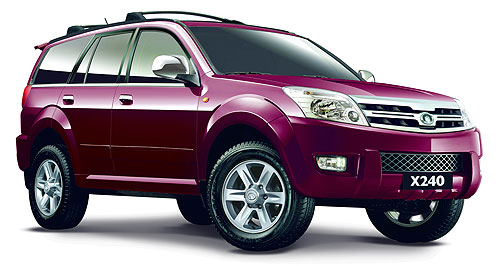
The affected Great Wall models include 21,500 utes and SUVs. The affected Chery models include 1700 J11 SUVs and 550 J3 light cars.
Great Wall X240


Recently delivered cars and the existing Chery J1 are free of asbestos and not included in the recall, according to the ACCC.

"We'll be writing to all owners very soon to explain the situation for their specific vehicle," said Ateco Automotive's Daniel Cotterill. "Included in that information will be a risk assessment done by an independent occupational health and safety consultant that outlines the risk to drivers and passengers from the asbestos in these gaskets as being negligible."

The report also notes that the danger to mechanics removing and replacing the components is minimal “even if [the work is] carried out in an uncontrolled way".

This is a terrible situation for the owners of these cars and the mechanics who have worked on them and it raises a lot of questions - particularly about the conditions of the factories where the cars were built and the health of the factory workers who handled these components.

Owners of affected Great Wall and Chery vehicles will be asked to return the vehicle to their dealership via a letter that they should receive this week.


Thursday, 19 July 2012

Online sellout of Subaru sports car in 3 hours changes dealer dynamic

Subaru in Australia has pioneered an internet-only sales process for its latest release BRZ sports car - which sold out in just three hours!

Media reports indicate that the car was sold online because the company was only allocated 201 cars for the Australian market, of which 50 had been bought by dealerships as demonstrator models, and therefore decided to sell the remainder online.

The online sales strategy may be cause for concern among Subaru’s 105 Australian dealers, who invest substantial amounts to establish and operate their dealerships. However Subaru claims it has used the online approach on this occasion so that customers could buy the sought-after BRZ, and then collect it from their nearest dealer, rather than have dealers competing for an allocation of the cars.